“The important thing is not to stop questioning. Curiosity has its own reason for existing.”
Albert Einstein
INTRODUCTION
My name is Pooja Verma, and I am a Bachelor of Computing Science student at Thompson Rivers University. My curiosity about how things work traces back to my earliest memories, from dismantling electronics with my father to encountering my first computer in the fourth grade. What began as a childhood fascination with machines and technology gradually evolved into a deep passion for problem-solving.
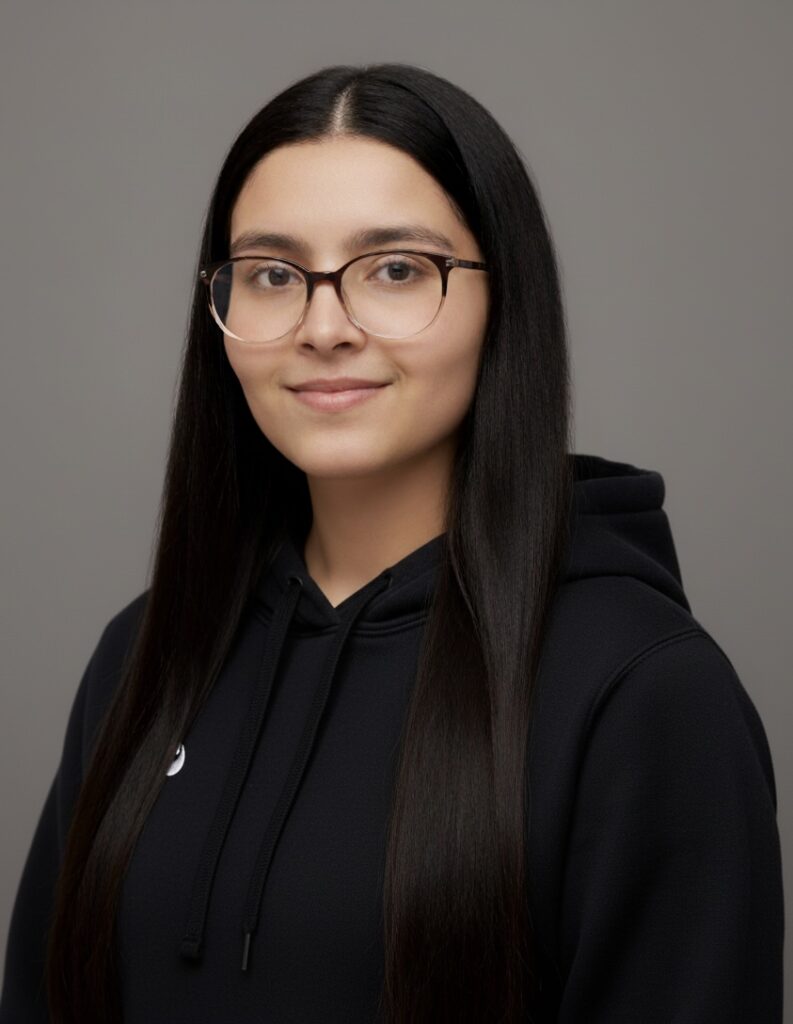
That same curiosity has since carried me through hackathons, research projects, and applied technical work, continuously shaping the way I approach every challenge. Over time, my interests deepened into the fields of Machine Learning, Deep Learning, and Artificial Intelligence, areas where I found that my drive to understand and build systems could be applied to solving meaningful, real-world problems.
My research journey has been shaped by a diverse and evolving set of experiences. As a UREAP Award recipient, I conducted research on Optimized Deep Learning Framework for Diabetic Retinopathy Detection and Classification Using Fundus Imaging, which culminated in a published research paper. Beyond this, my contributions as a Research Assistant on the TRU Think Project, my work as a Mitacs Co-op Research Intern, and my role as a Research Coach have each allowed me to engage with research from distinct yet complementary perspectives as a practitioner, a collaborator, and a mentor.
Together, these experiences have equipped me with a strong foundation in both technical and scholarly inquiry, fostering a deep appreciation for research that is rigorous, reproducible, and ethically grounded. They have also broadened my understanding of what impactful research looks like across different contexts, including academic publishing, intelligent system development, applied industry work, and peer mentorship. I look forward to elaborating on each of these experiences in greater depth throughout this portfolio.
-
Reflection
Reflecting on my research journey through this course has allowed me to view my diverse experiences as a unified narrative for the first time. Before this process, I treated each project as a separate and isolated endeavor. The structure of this portfolio helped me synthesize my work and recognize the clear connections between my studies in AI, my development of educational tools, and my current technical research in software systems. This holistic perspective has been invaluable in understanding how my skills as a researcher have matured over time.

From my early work with the UREAP Award to my current role at Patabid, I have learned that the core of research is a commitment to rigorous inquiry. The technical challenges I faced in building hybrid deep learning models and RAG systems taught me how to bridge the gap between theoretical knowledge and practical application. These experiences have shaped my identity as a researcher who values evidence based decision making and clear communication. By analyzing my past and present work together, I can see a consistent pattern of seeking out gaps in knowledge and developing targeted, data driven solutions.

Looking forward, I intend to continue this path of exploration and discovery. The skills I have developed in evaluating existing literature and mobilizing knowledge will remain central to my future work. I am dedicated to pushing the boundaries of what is possible in technology and medicine, ensuring that every project I undertake contributes meaningfully to the scientific community. This reflective process has not only organized my past accomplishments but has also provided a clear vision for the contributions I will continue to make in the years to come.